From 2016, financed by the “State Agency for the Environment of Schleswig-Holstein”, we are monitoring macrobenthic non-native species in seven shipping ports in the Baltic Sea. The results of the monitoring contribute to the Marine Strategy Framework Directive (MSFD) “descriptor D2 non-indigenous-species” as a part of the evaluation of environmental status of German coastal waters. The ultimate goal of the project is to develop strategies to prevent arrival and establishment of non-native species in German waters, and to protect native biodiversity and ecosystems.
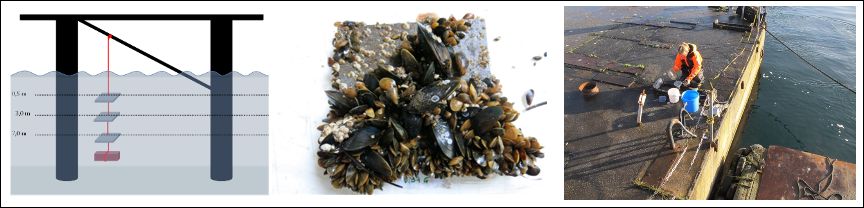
The monitoring is conducted annually in seven shipping ports in three cities: Flensburg, Kiel and Lübeck. Additionally, Kiel Canal has been monitored, too. But not regularly. These sites differ in salinity and temperature regimes. Extended Rapid Assessment Survey (eRAS) has been established ensuring the results comparison among locations. eRAS consists of examination of several different structures at the ports and exposing settlement panels. Thirty-three non-native species have been detected, with some of them known as notorious invaders.
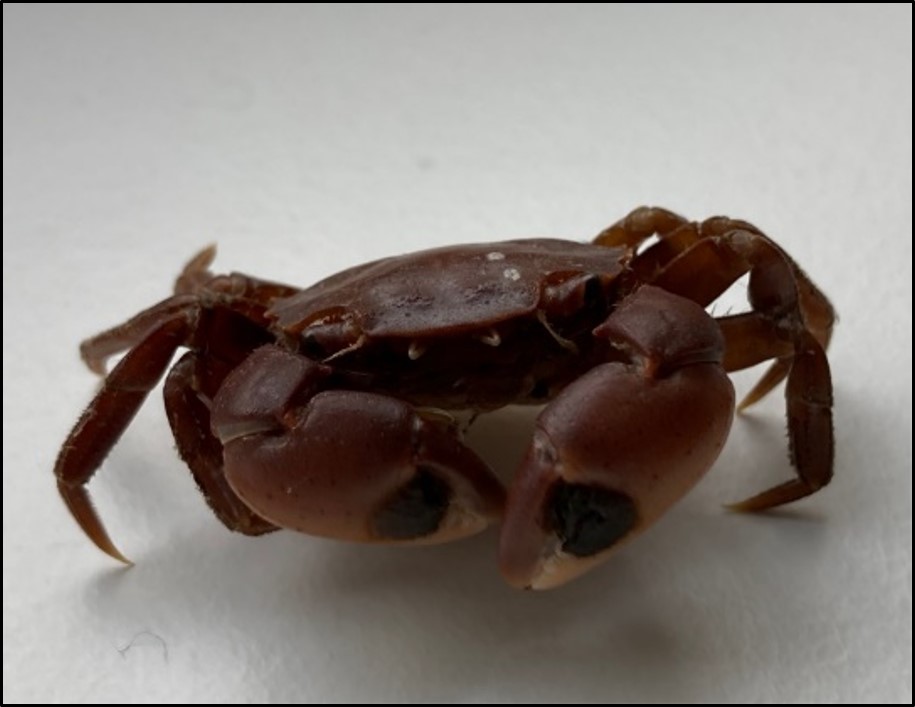
Native to Northwest Pacific, probably transported in ship ballast tanks and/or in connection to the aquaculture activities, the crab spread throughout northern Europe over the last 25 years. It was first recorded in the Kiel Fjord in 2014. In its introduced range, the crab can outcompete and outnumber European green crab’s populations. As an omnivore with a tendency toward predation, it affects the abundance of benthic taxa, potentially resulting in multifaceted consequences for the invaded ecosystem.
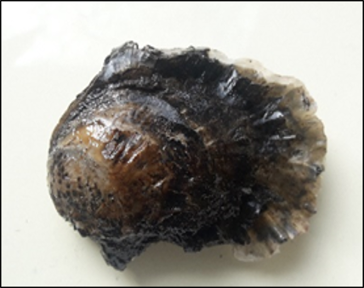
Magallana gigas — the Pacific oyster
(formerly Crassostrea gigas)
In the 20th century, to compensate for the losses of the European flat oysters, the Pacific oyster native to Japan and South-east Asia was introduced across Europe. Nowadays, the Pacific oyster is the most commonly farmed oyster with near-global distribution. Escaping from aquaculture sites, the species has established wild populations in many regions. It has been recorded in Kiel Fjord since 2019, as well as in Flensburg Bight. The large filtration capacity and eco-engineering characteristics of the Pacific oyster may cause huge changes in invaded habitats. The species may transform soft-bottom into hard-bottom habitats, change plankton composition, food webs, parasite life cycles, and heterogeneity of habitats.
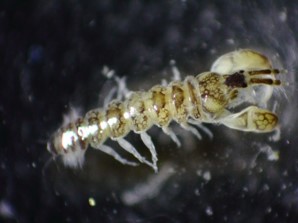
The species was first noted in Europe in 2006 in the Netherlands and Belgium. Now, it is established from the North Sea into Finland and Estonia in the Baltic Sea. Its origin and initial mode of introduction to Northern Europe are unknown. However, recreational boating is assumed as a vector of spread. The species has been reported from a wide range of climates, habitats, and salinities. In Northern Europe, it is especially abundant in shallow macroalgal belts and eelgrass meadows. No ecological or economic impacts have been reported.
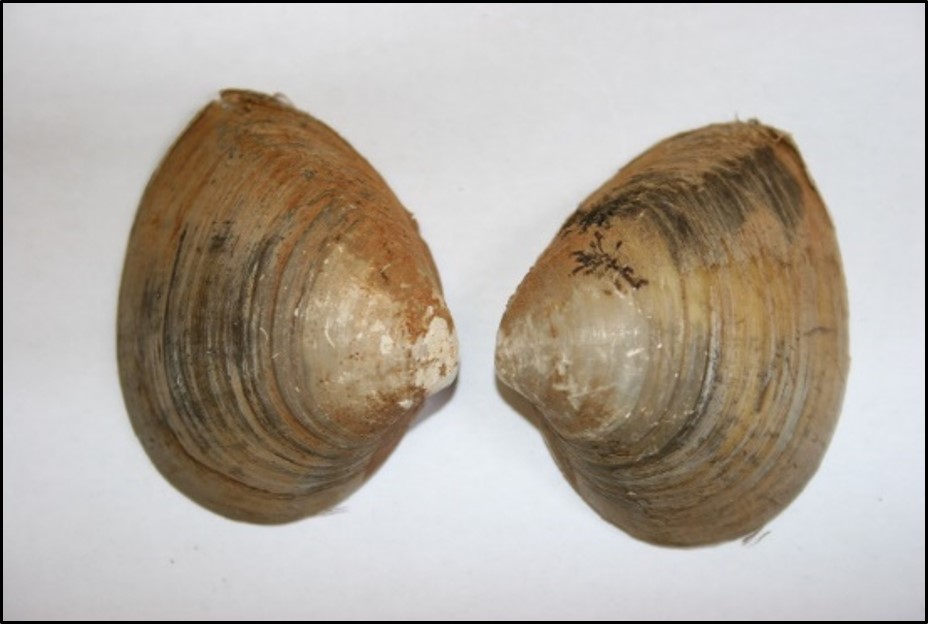
Rangia cuneata — the Gulf wedge clam
The clam is native to the Gulf of Mexico. Probably transported as larvae in ballast water, it spread to the eastern North America and Northern Europe. In 2013, it was detected in Kiel Canal near Brunsbüttel at salinity range of 5 - 15 ppt. Then, in 2016 and 2022 was recorded deeper in the canal, near Großnordsee, in freshwater conditions. The species burrows in the muddy and sandy bottoms of estuaries, may affect phytoplankton distribution, and planktonic and benthic food webs. Still, it is important food source for many species in native and invaded areas. However, the calm is also a fouling nuisance in pipes and water intake systems.