Importance
of geographic origin for invasion success -
Following the opening of the canals which link the North and Baltic Seas with
the Black and Caspian Seas, fauna from the Black, Caspian and Azov Seas (i.e., Ponto-Caspian species) dispersed
and became abundant in Northern Europe. The invasion history of the Laurentian
Great Lakes reveals a more intriguing pattern, with most of these Ponto-Caspian
invaders identified in the system only after European invasions. Interestingly,
this transfer has been asymmetrical, with only a few species from the Great
Lakes having invaded European waters and almost no species from freshwater
invading brackish or marine habitats. The main focus of this research is to
determine whether Ponto-Caspian species are inherently better colonizers than
species from other regions, and to explore transition of
species from brackish to freshwater habitats and vice versa.
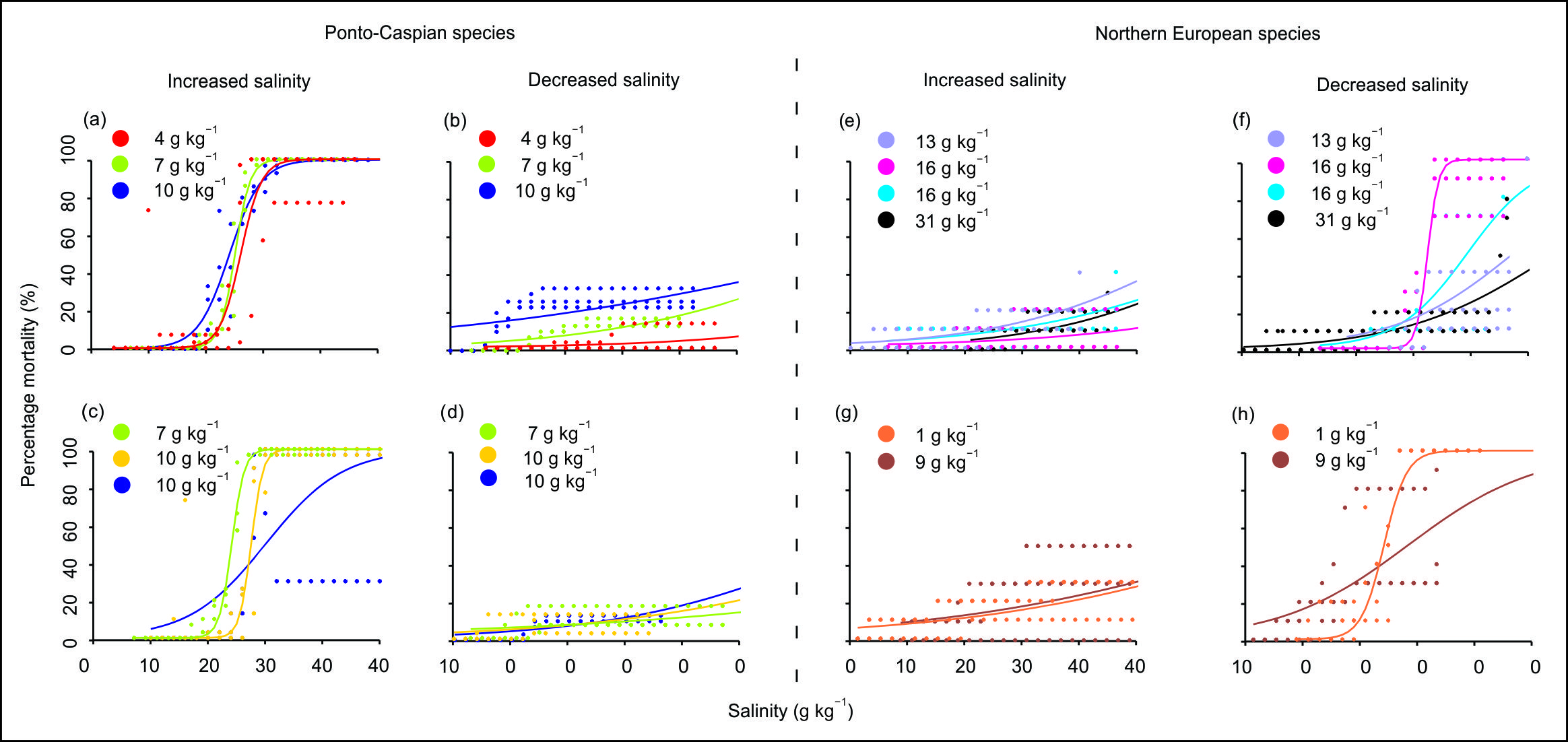
Mortality rates in the increased and decreased salinity treatments for Ponto-Caspian and Northern European species (a and b - Pontogammarus maeoticus; c and d - Obesogammarus crasus; e and f – Gammarus salinus; and g and h – Gammarus zaddachi). Different colours indicate different populations of the same species collected from different salinities.
Our salinity tests determined that gammarid populations tolerate quite large ranges of salinity, but particular pattern arose. The Ponto-Caspian species performed better in lower salinity and freshwter conditions, while those from Northern Europe in higher salinities.
Invasion
risk and impact of non-native species under current and future global change
scenarios - With climatic forcing projected to increase
global sea surface temperatures and alter oxygen regimes, and salinities
projected to change over the twenty-first century, the success and impacts of non-native
species are likely to change considerably in the near future. Our studies explore
how modulations to environmental regimes (e.g.,
temperature, salinity, oxygen
levels) interact to alter differential biotic interaction strengths between non-native
and native species under environmental change scenarios.
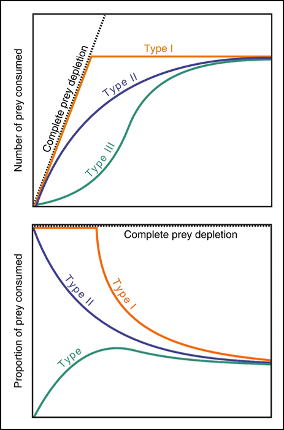
Here, we use recently proposed and under-applied ecological concepts, such as functional response, numerical response and prey switching approaches, to quantitatively compare interaction strengths between existing and emerging non-native species with trophically analogous native species. The main objective of these studies is to develop novel methods to quantify and compare the impacts of non-native species on ecosystems under shifting environmental regimes.
We use the same approaches to study trophic shifts among native species under global change to build better understanding of how those predicted changes may impact ecosystems in the future.
Adaptation of biological communities to anthropogenic stress and urban environments - Anthropogenic activities have drastically changed environmental conditions worldwide, negatively impacting biodiversity and ecosystem services. At the same time, the majority of the human population lives in urban areas that are greatly altered from natural habitats. Coastal ecosystems are often exposed to the most pervasive anthropogenic disturbances. Shipping ports, for example, have become severely afflicted areas of heavy metal pollution, noise pollution, and they contain huge amounts of artificial structures. Still, many species thrive in those environments. The main objective of this research is to improve our knowledge of ecosystem change due to anthropogenic impacts and of evolution of taxa in these impacted habitats.
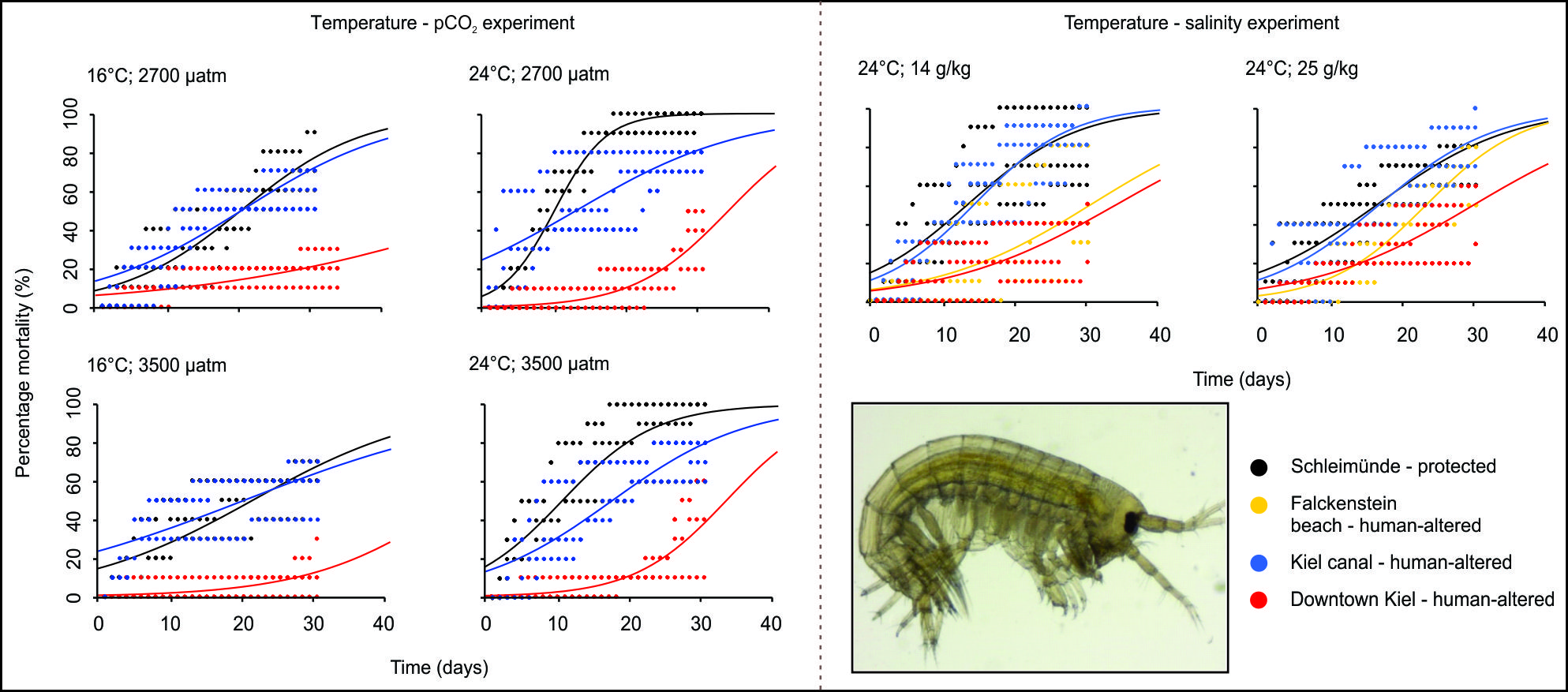
Our first results revealed that populations from impacted habitats typically outperform protected habitat populations, with individuals from the most impacted habitat being the most robust. We propose that urban populations are adapting to life in disturbed environments — this adaptation concurrently promotes more resilient rescue populations but potentially confers increased invasion risk from non-native species.
Invasion risk from the pet trade - An increasingly globalized world has facilitated the spread of non-native species via diverse introduction vectors. One crucial vector that has benefited from international supply chains is the pet trade. Indeed, the aquatic pet trade alone has enabled the establishment of freshwater and marine species in new habitats, with well-known examples including goldfish (Carassius auratus, Linnaeus, 1758), pond slider terrapins (Trachemys scripta, Thunberg 1792) and various crayfish species.
While most species within this poorly regulated trade remain
in confinement throughout their lives, many individuals are intentionally
released or escape from importers, sellers or consumers. The pet trade also shown
to specifically favour invasive non-native species — those responsible for
ecological and/or economic impacts. Indeed, it is deemed responsible for 53% of
invasive non-native vertebrates and one third of aquatic invasive non-native
species.
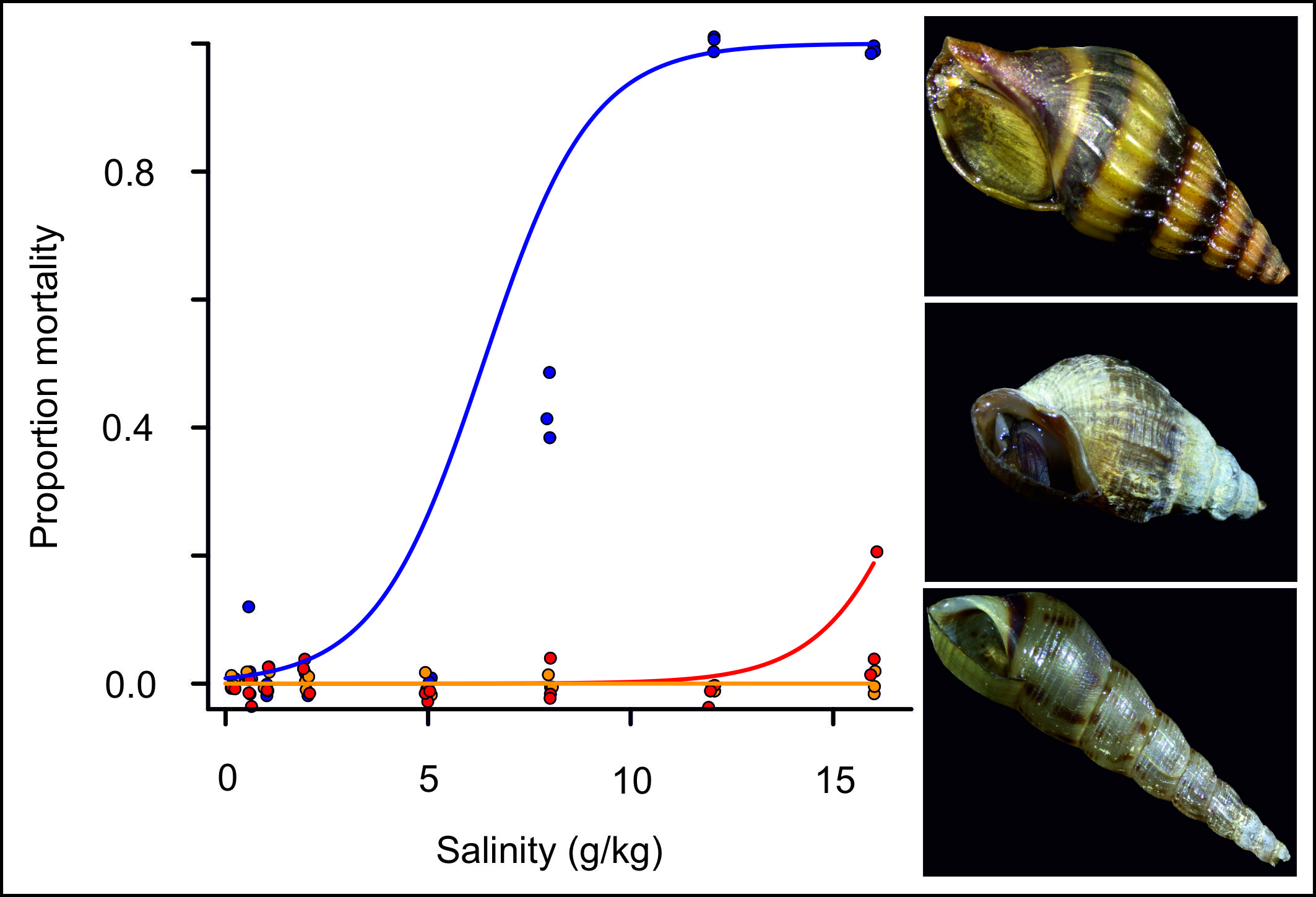
Here, we demonstrated that out of three commonly traded ´freshwater´ snails, two of them shown almost no mortality after 30 days being exposed to salinities up to 15 g/kg, with increasing predatory affinity at higher salinities.
Mortality curves in regard to salinity for the three gastropod species after 30 days. Melanoides tuberculata, Tarebia granifera and Anentome helena are displayed in yellow, red and blue, respectively.
Current status and restauration of the European flat oyster Ostrea edulis in the Adriatic Sea - The native region of the European flat oyster Ostrea edulis (Linnaeus, 1758) stretches along European coast from Norway to the Mediterranean and Black Seas. Natural beds and reefs of the flat oyster, once abundant and widespread, dramatically declined throughout Europe during the 20th century due to overfishing combined with habitat degradation, water pollution and disease outbreaks. To compensate for the losses of the flat oysters, the non-native Pacific oyster Magallana gigas (formerly Crassostrea gigas; Thunberg, 1793) was introduced across Europe.
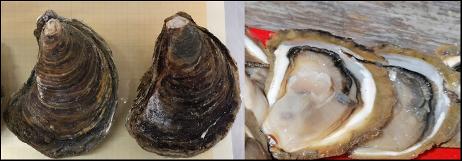
POPOYSTER serves as a holistic action to collect relevant biological and ecological data on natural populations of the flat oyster, necessary for its future conservation and restoration measures. (Click here for the project description)
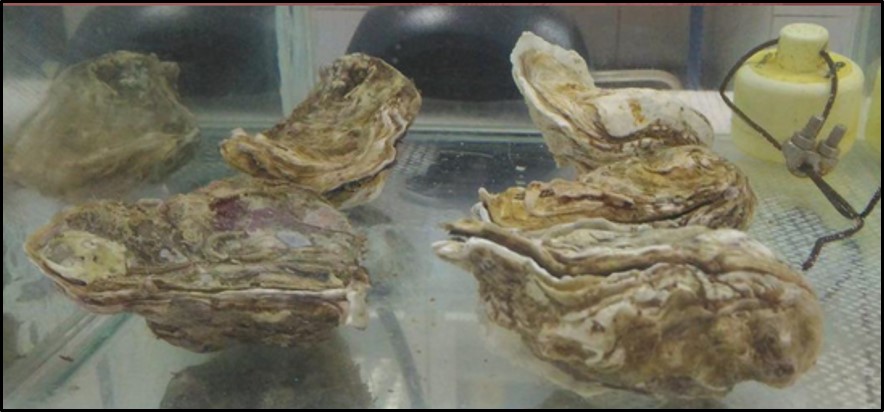
COCOA has assessed impacts of the Pacific oyster on ecosystems, fisheries and aquaculture in the Adriatic Sea, with particular focus on impacts on the native oyster O. edulis. (Click here for the project description)
Economic
costs of non-native species - Much research has been
invested in understanding ecological impacts of non-native species, but
empirical studies about economic effects has just recently gained attention. Based
on the costs recorded from the existing literature, the cumulative global cost
over the last four decades estimated to exceed US$ 1 trillion, with those of
aquatic non-native species conservatively summed to US$ 345 billion. The
majority of costs in aquatic habitats were attributed to invertebrates (62%),
followed by vertebrates (28%) and then plants (6%).
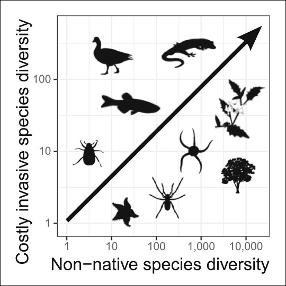
A hypothesis posits that the richness of impactful invasive species increases proportionally with the richness of non-native species more generally. A competing hypothesis suggests that certain species features disproportionately enhance the chances of non-native species becoming impactful, causing invasive species to arise disproportionately relative to the numbers of non-native species.
Here, we tested whether invasive species with reported monetary costs reflect global numbers of established non-native species among phyla, classes, and families. Our results reveal that numbers of invasive species with economic costs largely reflect non-native species richness among taxa (i.e., in 96 % of families). However, a few costly taxa were over and under-represented, and their composition differed among environments and regions.
Non-native species in European inland waters - Impacts of biological invasions on freshwater communities have been consistently reported. Beside species loss, drastically altered community composition and ecosystem functioning were documented, too. Functional losses may occur even before a native population is extirpated, particularly when low-density species become ‘functionally extinct’. Thus, as a result of declining native biodiversity, there may not only be a taxonomic homogenisation but also a rising functional similarity among communities.
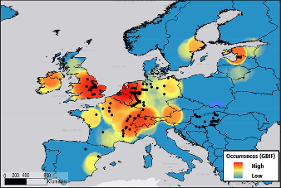
Ecosystem engineers, such as zebra
mussels Dreissena polymorpha,
may particularly impact invaded habitats, and dramatically alter ecosystem functioning.
The distribution of time series (i.e. sites) invaded by D. polymorpha indicated by black dots and the availability of occurrences recorded in GBIF as the gradient.
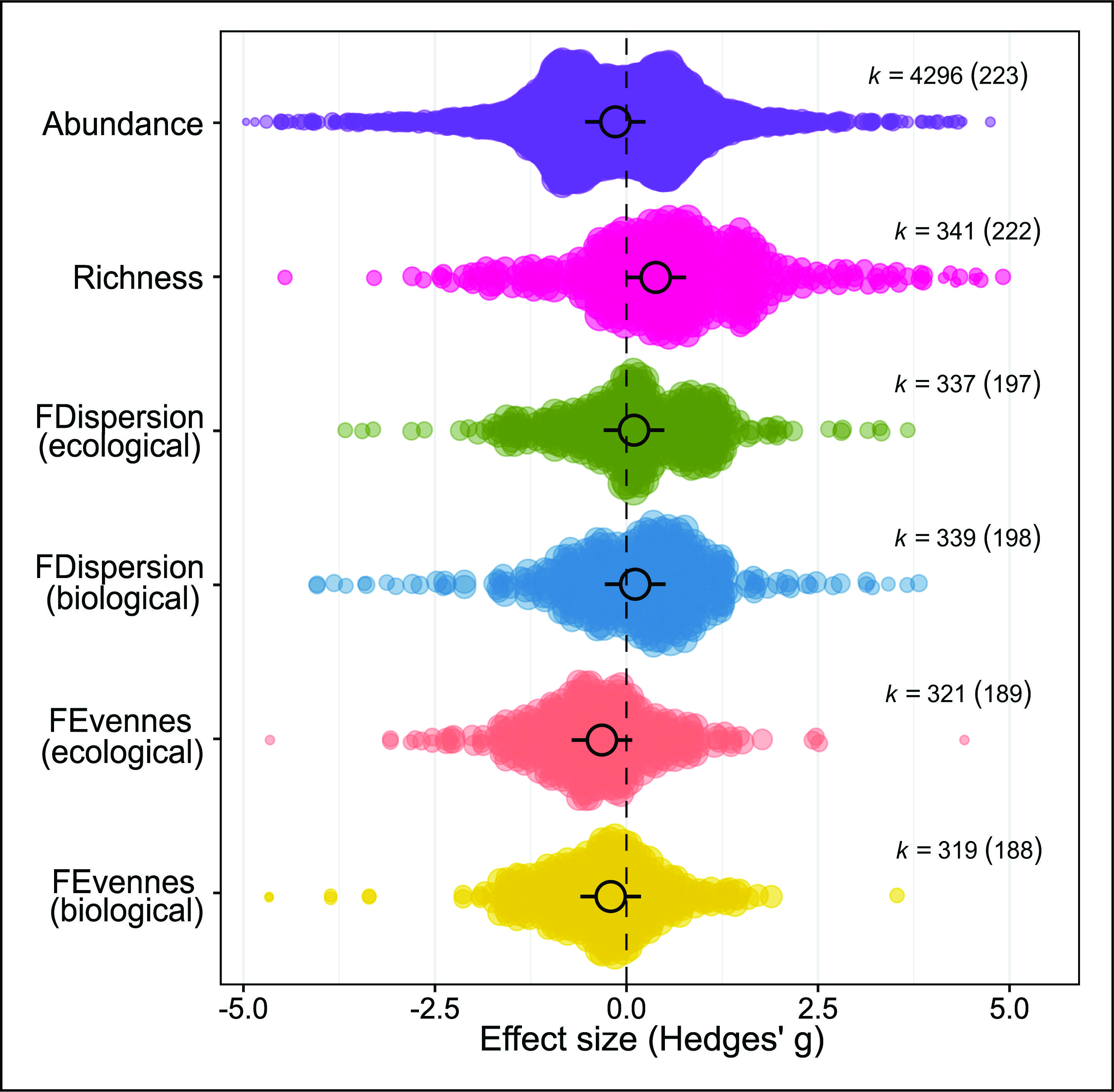
Distribution of the effect sizes of non-native communities on native communities in European inland waters, with the mean effect size with 95% confidence interval (CI). FDispersion and FEvennes denotes functional dispersion and functional evenness, respectively.
Propagule and colonization pressure: ships’ ballast tanks as a study case - the invasion process consists of multiple stages, including transport, introduction, establishment, and later on, possible spread. The invasion model includes three factors that affect the transition between stages: number of individuals released — or propagule pressure; physiological tolerance of individuals to physical and chemical conditions during transport and in the new area; and their integration into the recipient biological community. It is a complex process and many invasion events ultimately end unsuccessfully. While large inocula and multiple introduction events are positively related to invasion success, the number of non-native species in an ecosystem may simply reflect the number of species introduced — or colonization pressure.
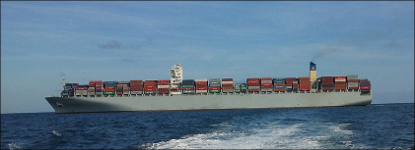
Shipping industry is the major vector for introduction of non-native species in aquatic habitats.
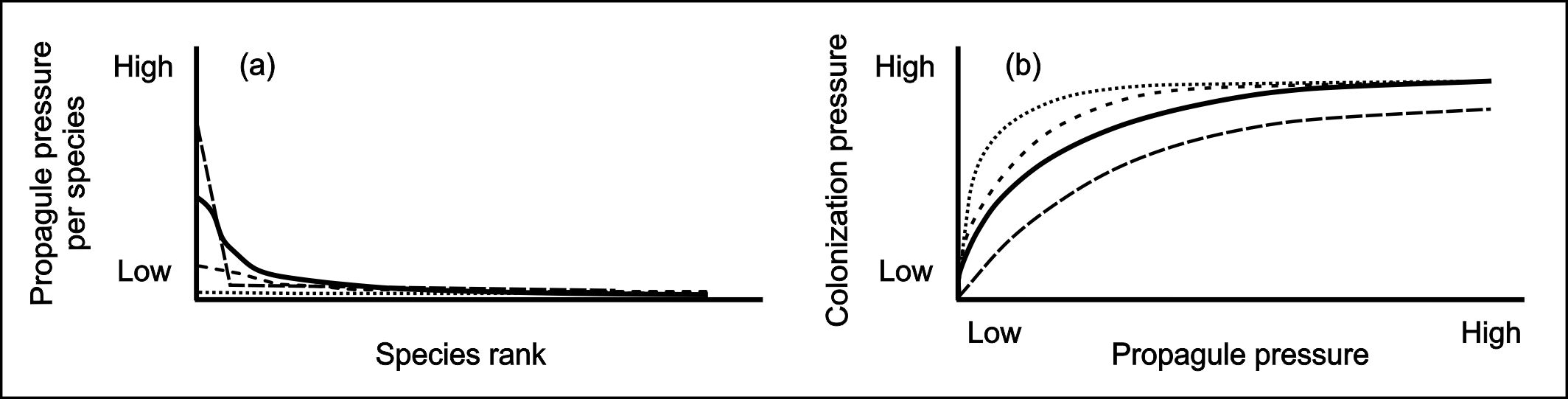
Four distinct empirical species rank-abundance distributions for invertebrates in ships ballast water (a), and propagule pressure–colonization pressure relationships following random sampling of 1:1000 organisms within each distribution (b).
Here, we use ships’ ballast water and sediment as a study model to explore propagule and colonization pressure. We study transport patterns and survival of invertebrates and their dormant stages in the hostile environment of ships’ ballast tanks, community dynamic of plankton during the transport stage of the invasion process, and efficacy of mid-ocean ballast water exchange and ballast water treatment systems for preventions of new species introductions.
We also conducted the first empirical study to explore the relationship between propagule and colonization pressure for entire communities, and demonstrated that even though ships transport nearly entire local communities, a strong relationship between propagule and colonization pressure exists only for dinoflagellates. When multiple events are considered, colonization pressure of invertebrates and diatoms may fluctuate widely irrespective of propagule pressure.